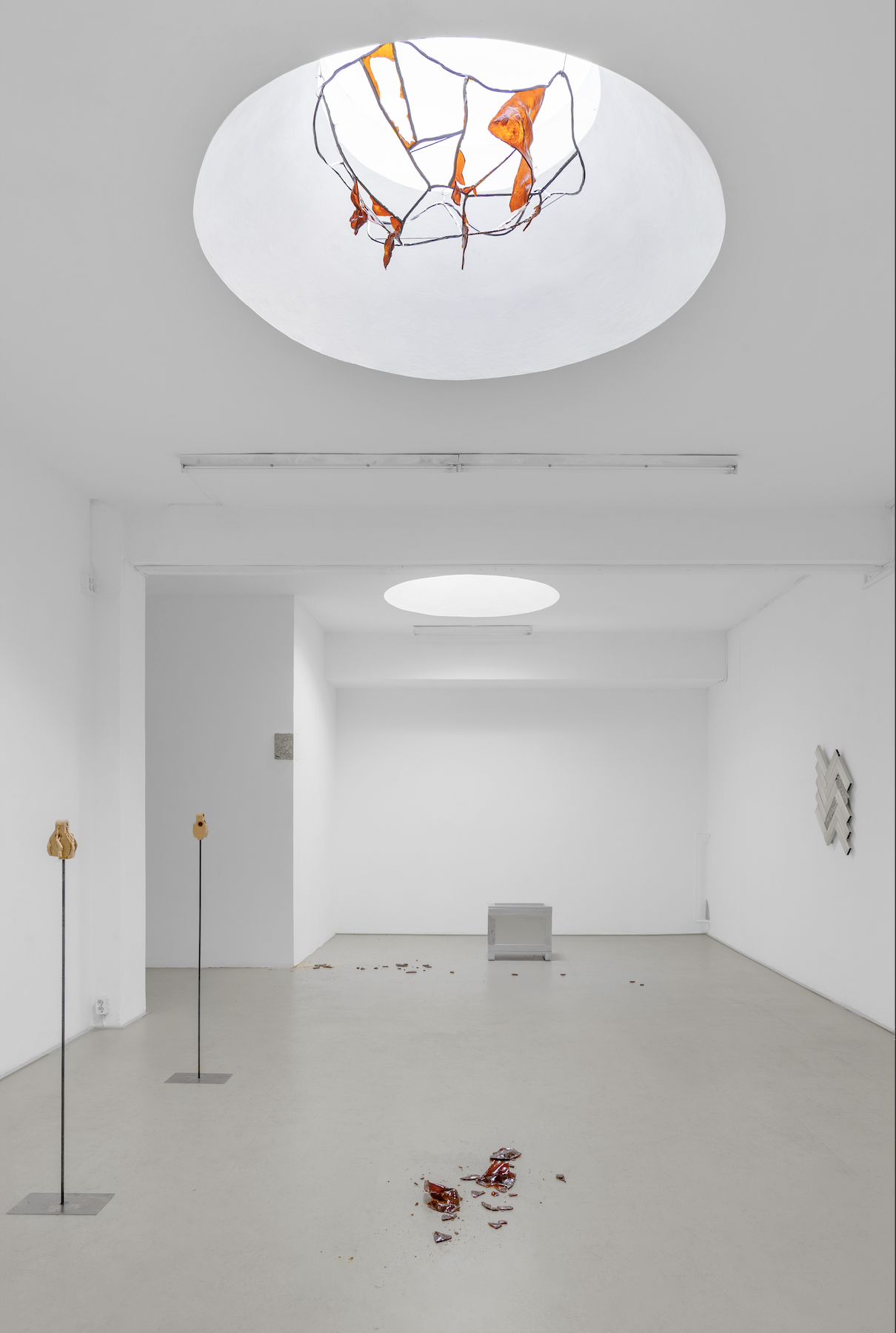
KALAMITÄT (2026), exhibition view Galerie Herold
KALAMITÄT
The forest as a production system:
optimized for efficiency,
structurally vulnerable to collapse.
The dieback of spruce forest stands as a consequence of industrial logics of order.
In her first solo exhibition, KALAMITÄT, Léonie von Saldern investigates how human interventions alter landscapes and addresses the control systems behind ecological destruction. Between narratives of sustainability, temporal regimes, and transience, the exhibition opens a space in which the interplay of nature, industry, and responsibility is visibly shifted. The exhibition was enveloped by an immersive sound work by the Catalan artist Cabiria.
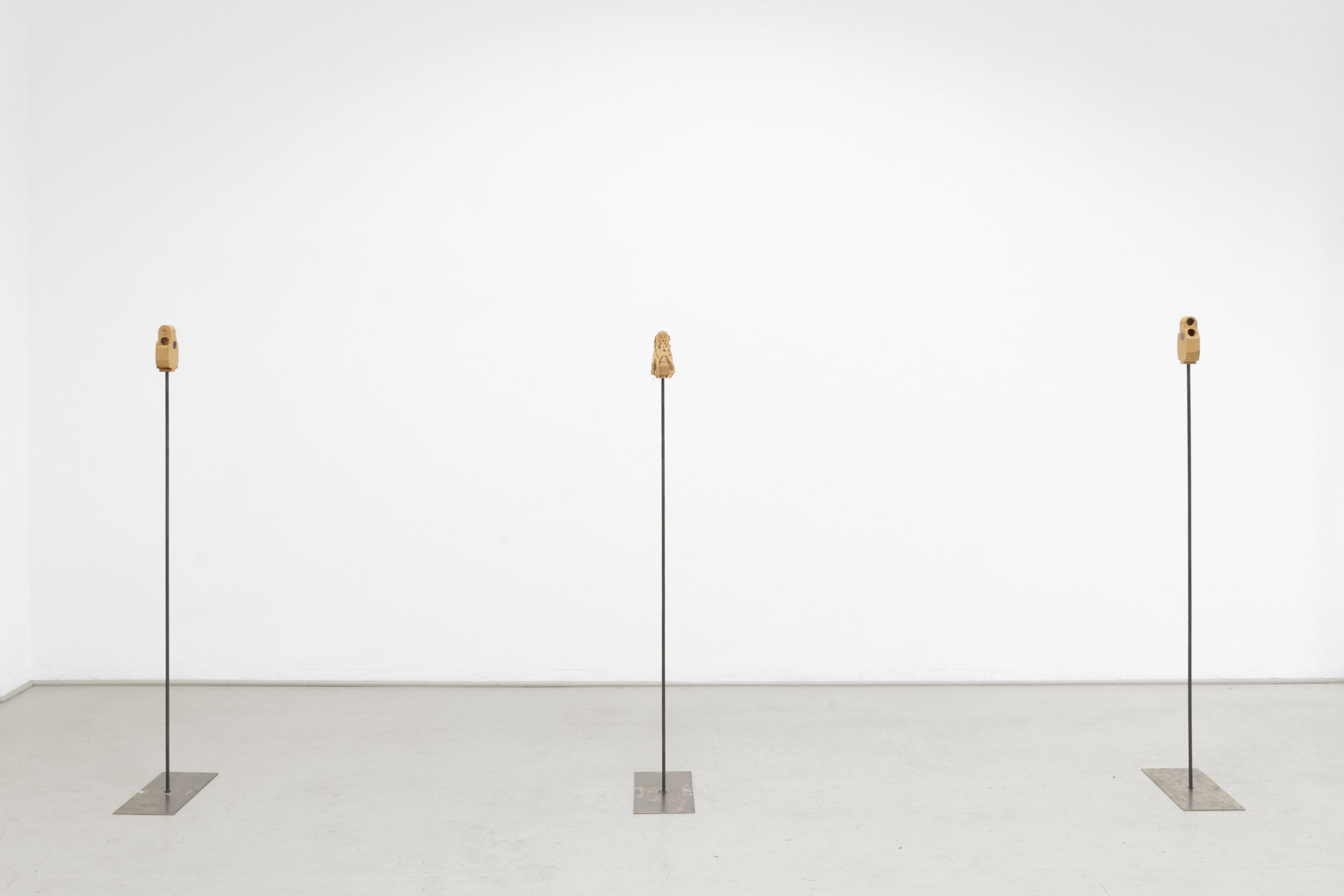
Relascope (2026)
The relascope is an essential forestry tool to record various parameters relevant to forest growth and yield. In these 3D-printed replicas, the optical glass lenses have been replaced with spruce resin. This shifts the focus away from the purely quantitative assessment of the forest as a resource, towards an observation through the material itself. The instrument no longer measures productivity, but becomes a speculative lens through which the forest reflects its own stresses and transformations.
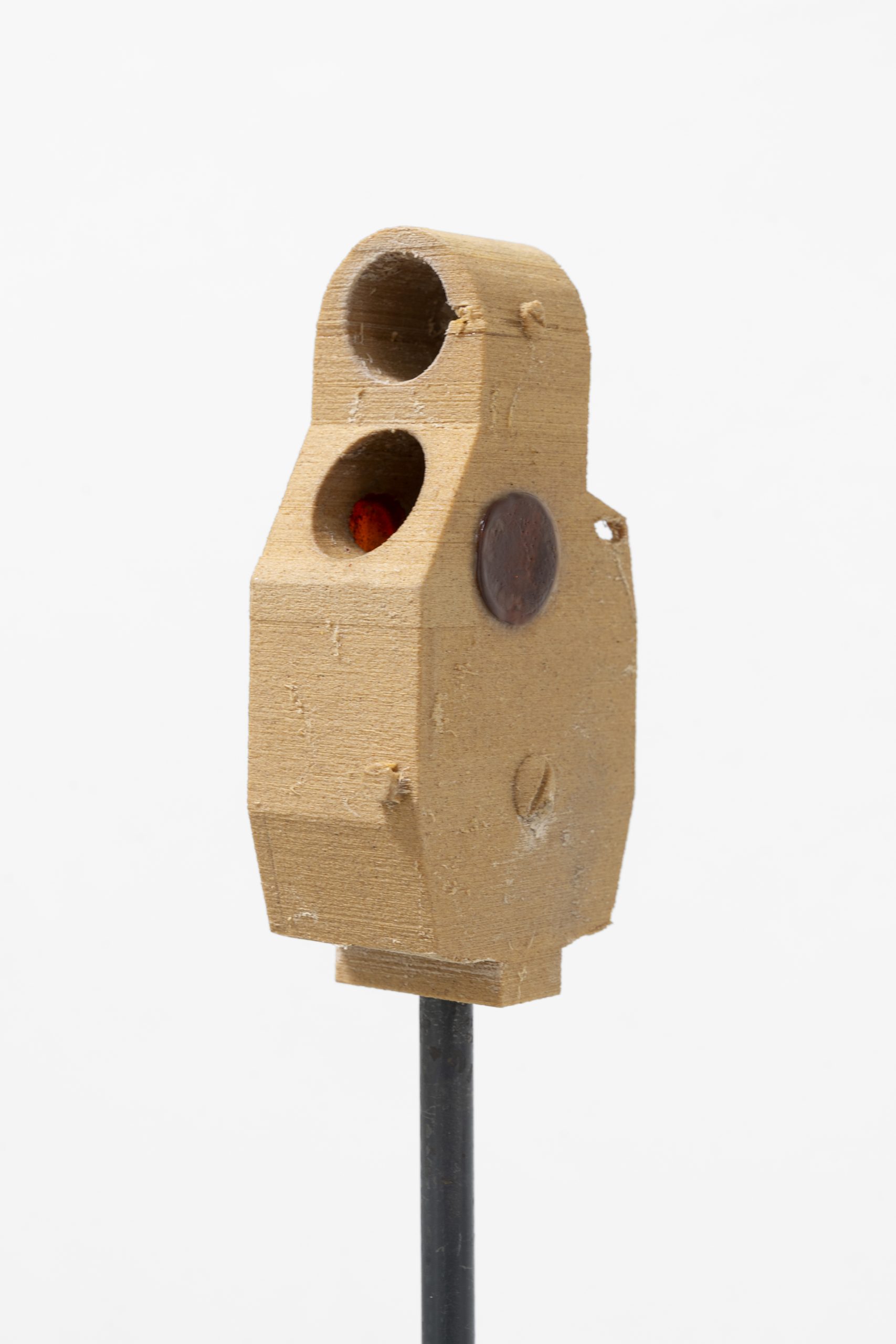
Relascope (2026), PLA with 40% wood, spruce resin
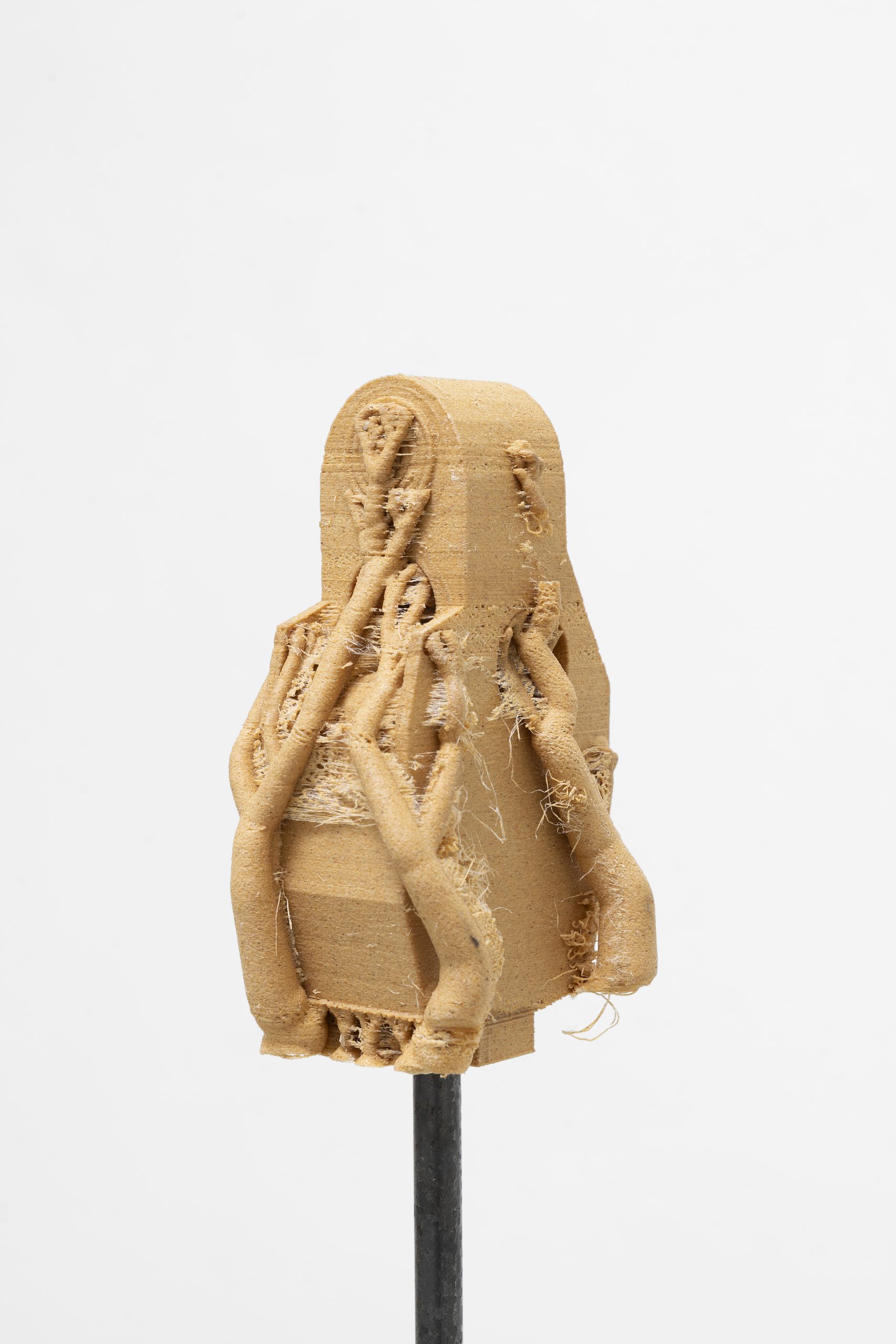
relascope (2026), PLA with 40% wood
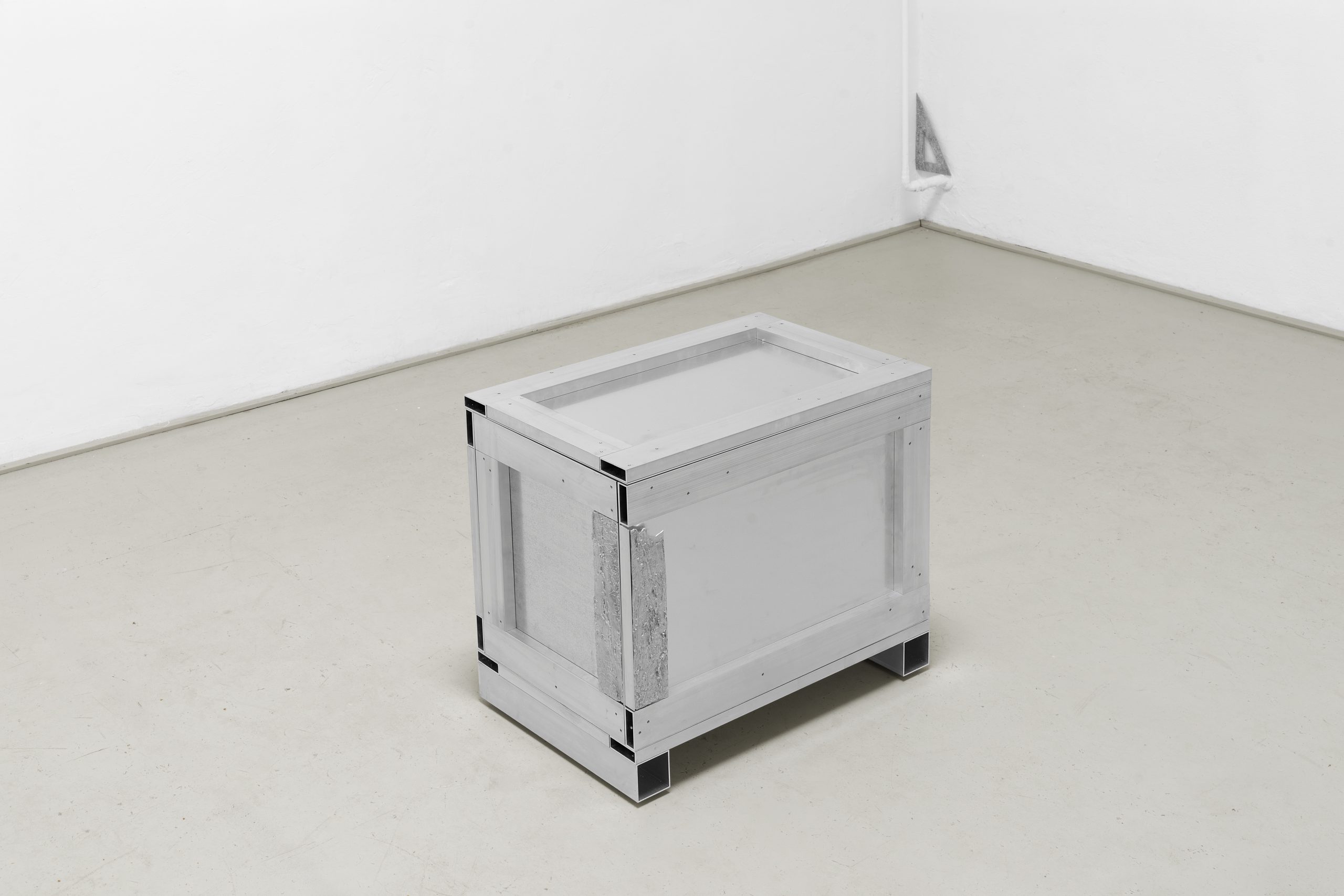
BCASFD crate (2026), aluminium
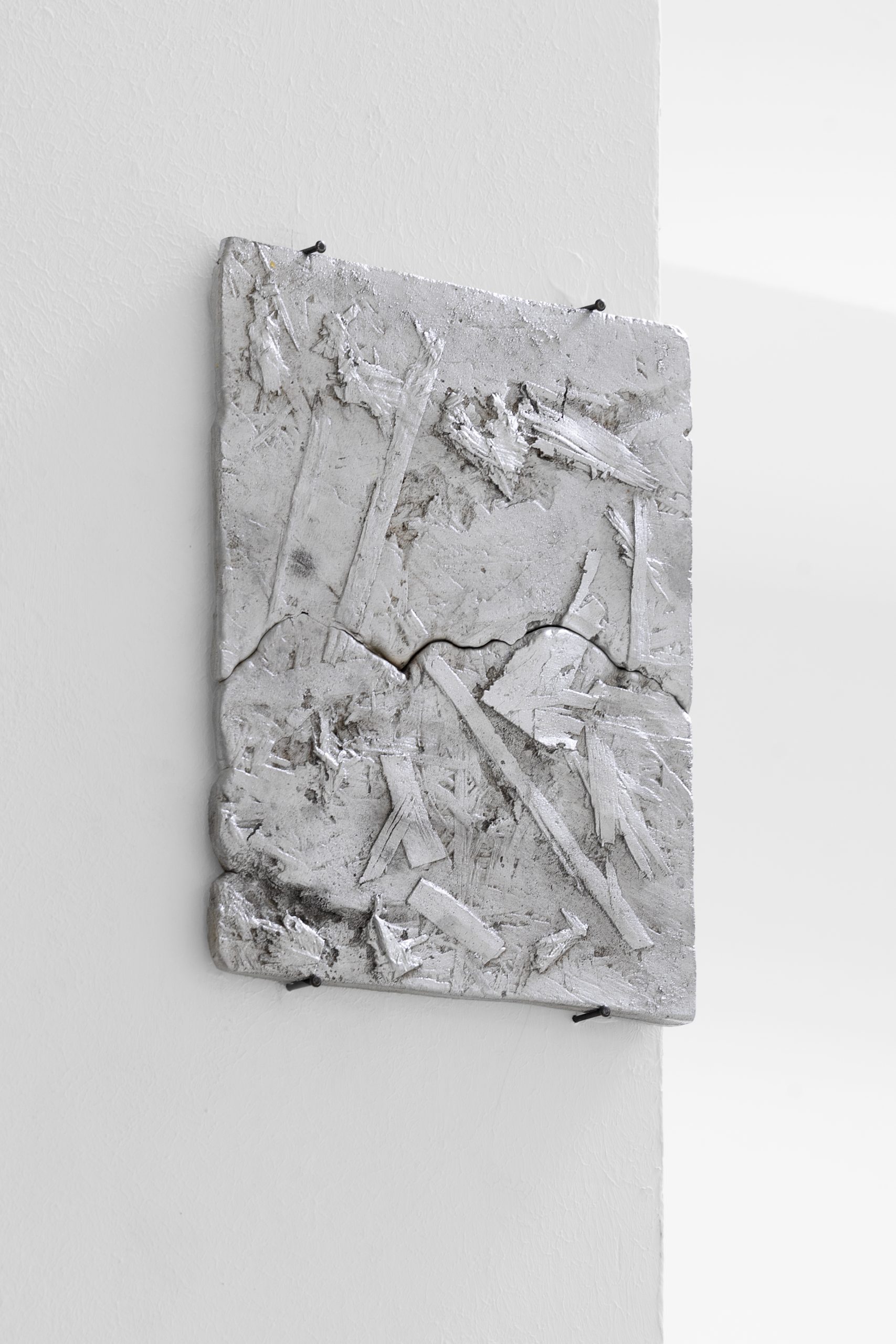
OSB diptych (2026), aluminium
This diptych brings seemingly constraining material worlds into dialogue. The juxtaposition of spruce resin and aluminium blurs the boundaries between organic flow and metallic solidification, leaving the question of whether the two can coexist or whether the metal has ultimately displaced the natural form.
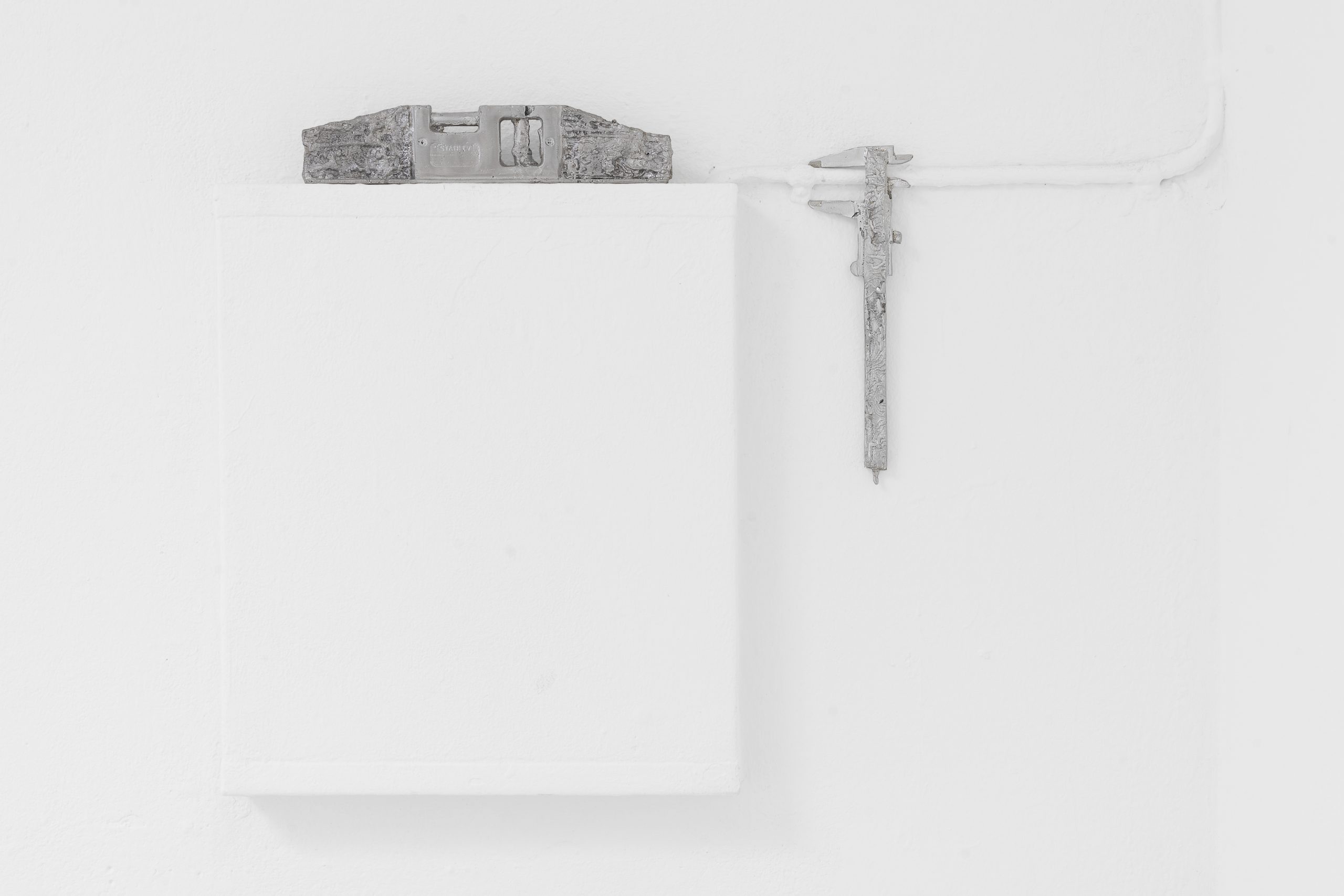
(im)measuring tools (2024)
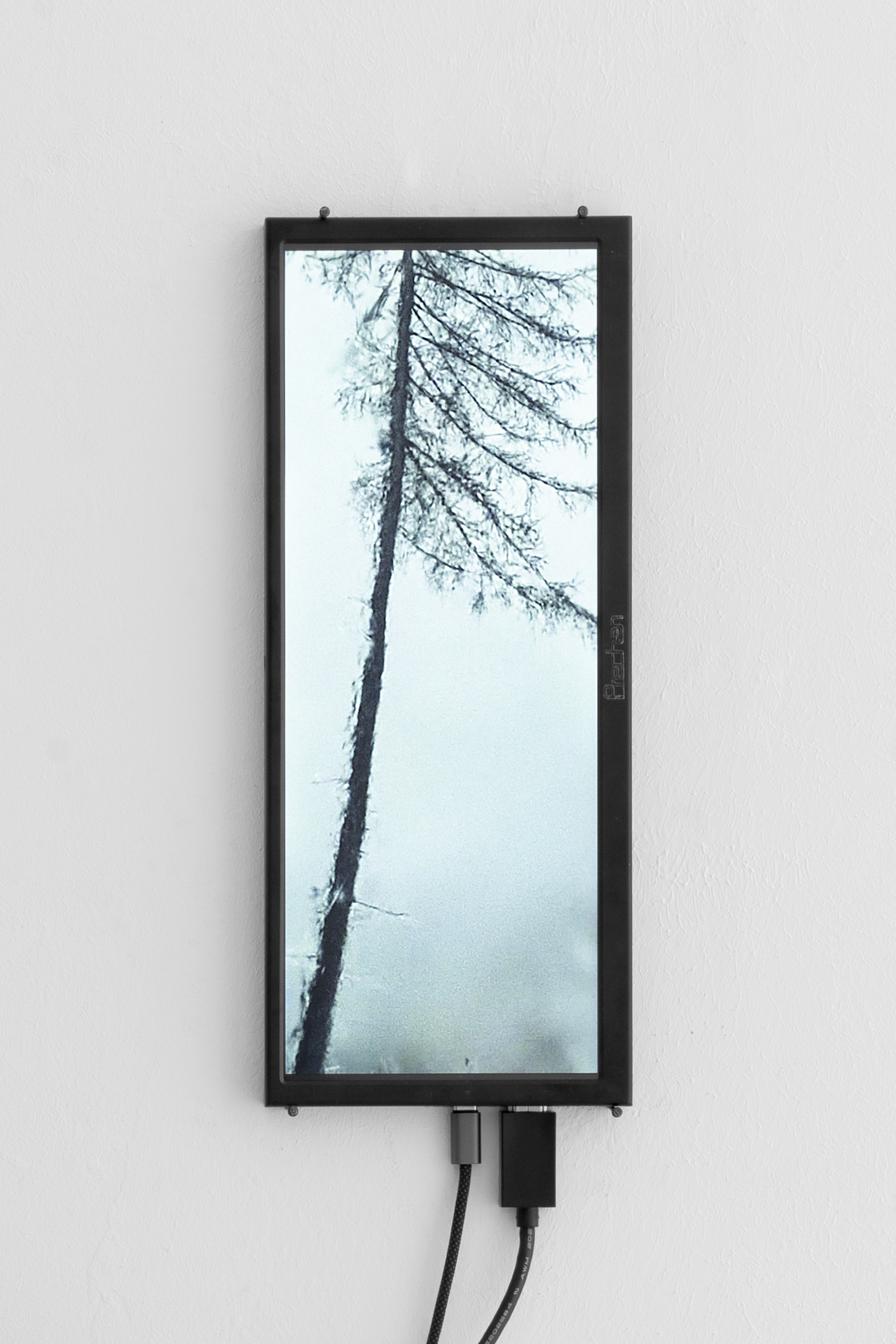
O schöner grüner Wald (2026), film of 3D scan, music: Mendelssohn – Abschied vom Walde, 1843
The once verdant forest, celebrated by Joseph von Eichendorff as a place of retreat and inner contemplation, appears here only as a digital echo of itself. The 3D scan of the last remaining spruce on a hill in Bergneustadt no longer preserves a living natural space, but rather an isolated relic in an increasingly fragmented landscape. Accompanied by Mendelssohn’s Abschied vom Walde (Farewell to the Forest), romantic soundscapes of the forest overlap with the present reality of its disappearance.
The work explores the tension between romantic idealization of nature and the ecological present: The forest no longer exists as an untouched place of longing, but as a digitally stored memory, measured, scanned, and archived. The digitized spruce becomes a monument to landscape loss and raises the question of how nature can be experienced in the future: physically, or only as a data set, image, and cultural projection.
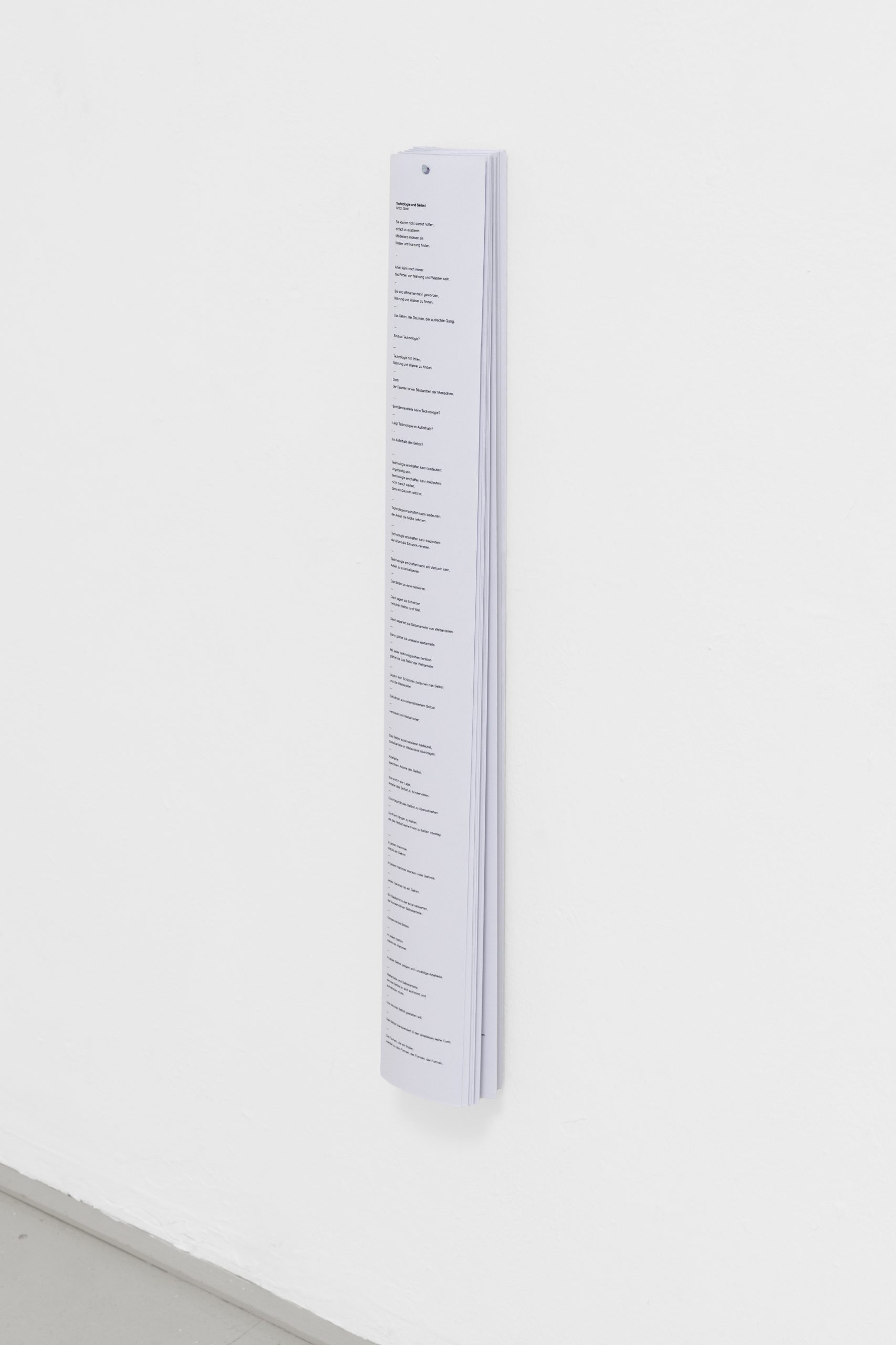
“Technologie und Selbst” by Anton Gost (2026)
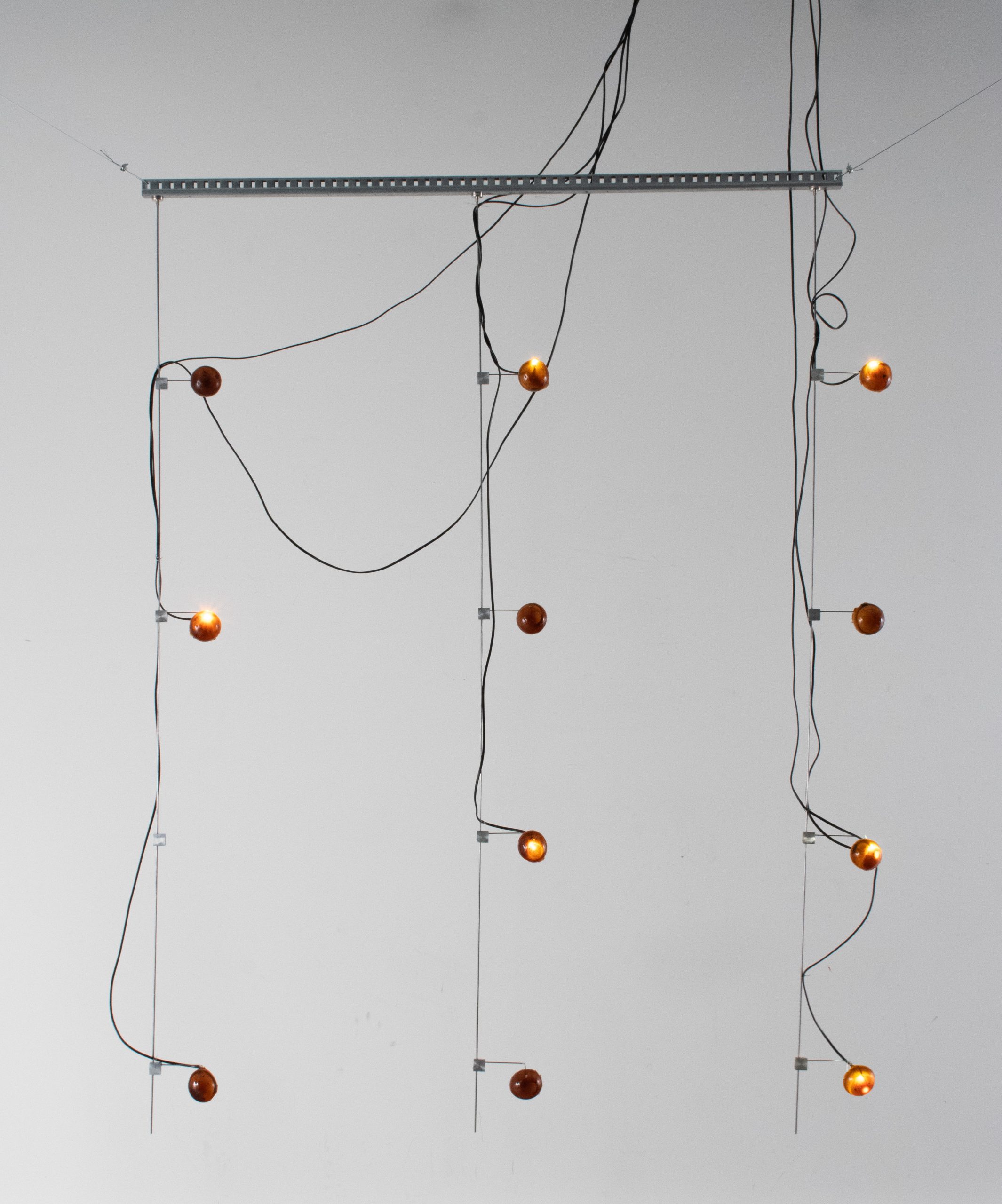
Bit-Ro (2026), spruce resin, aluminium, steel, LED, Arduino
Spruce resin reacts to temperature, light, and time. It becomes brittle, deforms, and is continuously altered through its viscosity. This creates a fragile archive of ecological states, in which decay is experienced not as loss, but as a visible process of memory, environment, and material transformation.
The Bit-Rot installation translates the micro-events of spruce resin (cracks, tensions, stagnation) into Morse code using a self-defined protocol and visualizes them as light pulses through resin lenses. The grid-based installation references both monoculture forestry and digital data storage, reflecting on how ecological processes are increasingly structured and understood as data.
Photos: Franziska von den Driesch
KALAMITÄT (2026) exhibition view, Galerie Herold
KALAMITÄT
The forest as a production system:
optimized for efficiency,
structurally vulnerable to collapse.
The dieback of spruce forest stands as a consequence of industrial logics of order.
In her first solo exhibition, KALAMITÄT, Léonie von Saldern investigates how human interventions alter landscapes and addresses the control systems behind ecological destruction. Between narratives of sustainability, temporal regimes, and transience, the exhibition opens a space in which the interplay of nature, industry, and responsibility is visibly shifted. The exhibition was enveloped by an immersive sound work by the Catalan artist Cabiria.
Relascope (2026)
The relascope is an essential forestry tool to record various parameters relevant to forest growth and yield. In these 3D-printed replicas, the optical glass lenses have been replaced with spruce resin. This shifts the focus away from the purely quantitative assessment of the forest as a resource, towards an observation through the material itself. The instrument no longer measures productivity, but becomes a speculative lens through which the forest reflects its own stresses and transformations.
Relascope (2026), PLA with 40% wood, spruce resin
Relascope (2026), PLA with 40% wood, spruce resin
BCASFD crate (2026), aluminium
OSB diptych (2026), aluminium
This diptych brings seemingly constraining material worlds into dialogue. The juxtaposition of spruce resin and aluminium blurs the boundaries between organic flow and metallic solidification, leaving the question of whether the two can coexist or whether the metal has ultimately displaced the natural form.
(im)measuring tools (2024), aluminium
O schöner grüner Wald (2026), film of 3D scan, music: Mendelssohn – Abschied vom Walde, 1843
The once verdant forest, celebrated by Joseph von Eichendorff as a place of retreat and inner contemplation, appears here only as a digital echo of itself. The 3D scan of the last remaining spruce on a hill in Bergneustadt no longer preserves a living natural space, but rather an isolated relic in an increasingly fragmented landscape. Accompanied by Mendelssohn’s Abschied vom Walde (Farewell to the Forest), romantic soundscapes of the forest overlap with the present reality of its disappearance.
The work explores the tension between romantic idealization of nature and the ecological present: The forest no longer exists as an untouched place of longing, but as a digitally stored memory, measured, scanned, and archived. The digitized spruce becomes a monument to landscape loss and raises the question of how nature can be experienced in the future: physically, or only as a data set, image, and cultural projection.
“Technologie und Selbst” by Anton Gost (2026)
Bit-Ro (2026), spruce resin, aluminium, steel, LED, arduino
Spruce resin reacts to temperature, light, and time. It becomes brittle, deforms, and is continuously altered through its viscosity. This creates a fragile archive of ecological states, in which decay is experienced not as loss, but as a visible process of memory, environment, and material transformation.
The Bit-Rot installation translates the micro-events of spruce resin (cracks, tensions, stagnation) into Morse code using a self-defined protocol and visualizes them as light pulses through resin lenses. The grid-based installation references both monoculture forestry and digital data storage, reflecting on how ecological processes are increasingly structured and understood as data.
Photos: Franziska von den Driesch