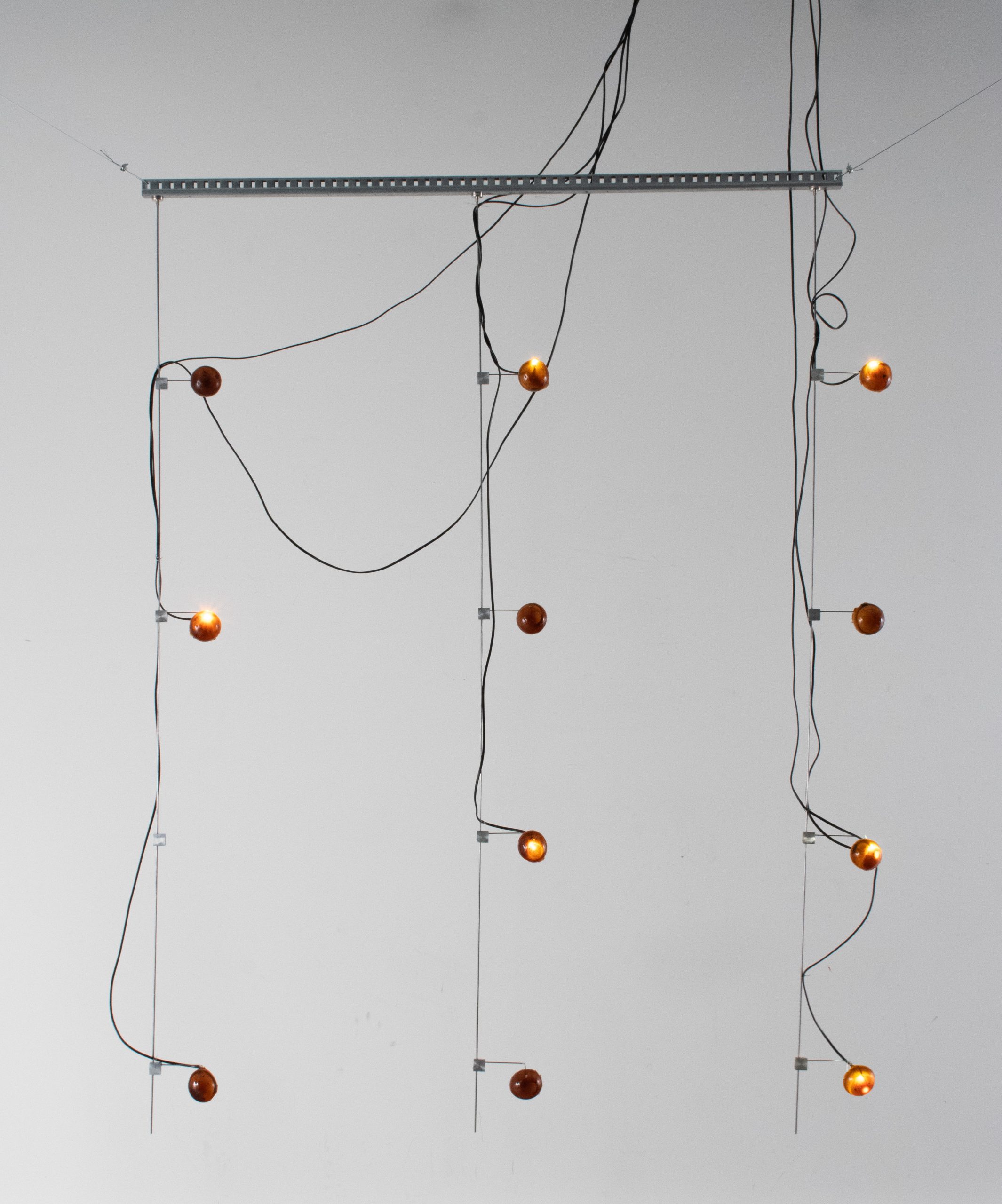
Bit-Rot (2026), spruce resin, aluminium, steel, LED, arduino
Bit-Rot
Spruce resin reacts to temperature, light, and time. It becomes brittle, deforms, and is continuously altered through its viscosity. This creates a fragile archive of ecological states, in which decay is experienced not as loss, but as a visible process of memory, environment, and material transformation.
The Bit-Rot installation translates the micro-events of spruce resin (cracks, tensions, stagnation) into Morse code using a self-defined protocol and visualizes them as light pulses through resin lenses. The grid-based installation references both monoculture forestry and digital data storage, reflecting on how ecological processes are increasingly structured and understood as data.
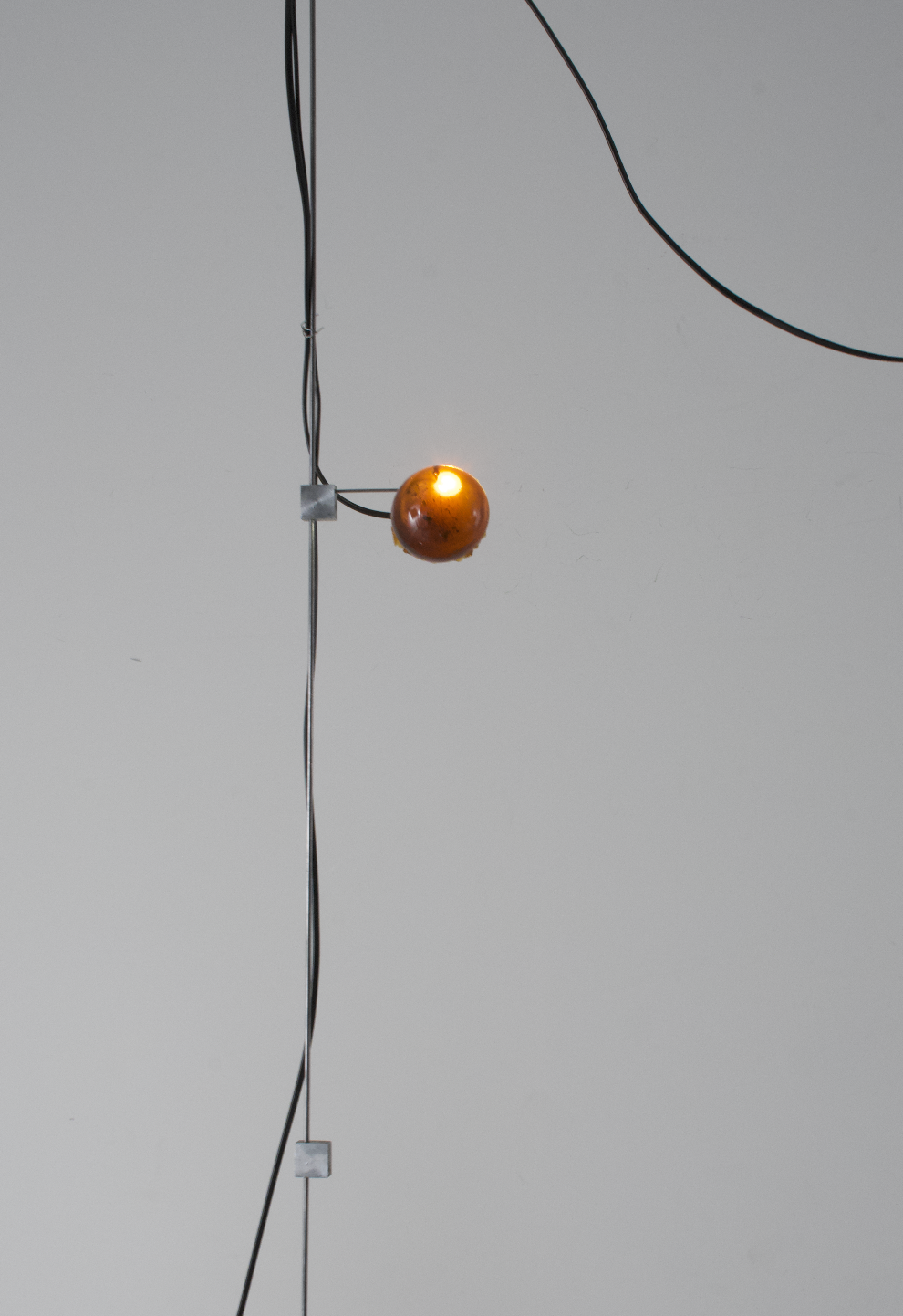
Bit-Rot (2026), spruce resin, aluminium, steel, LED, arduino
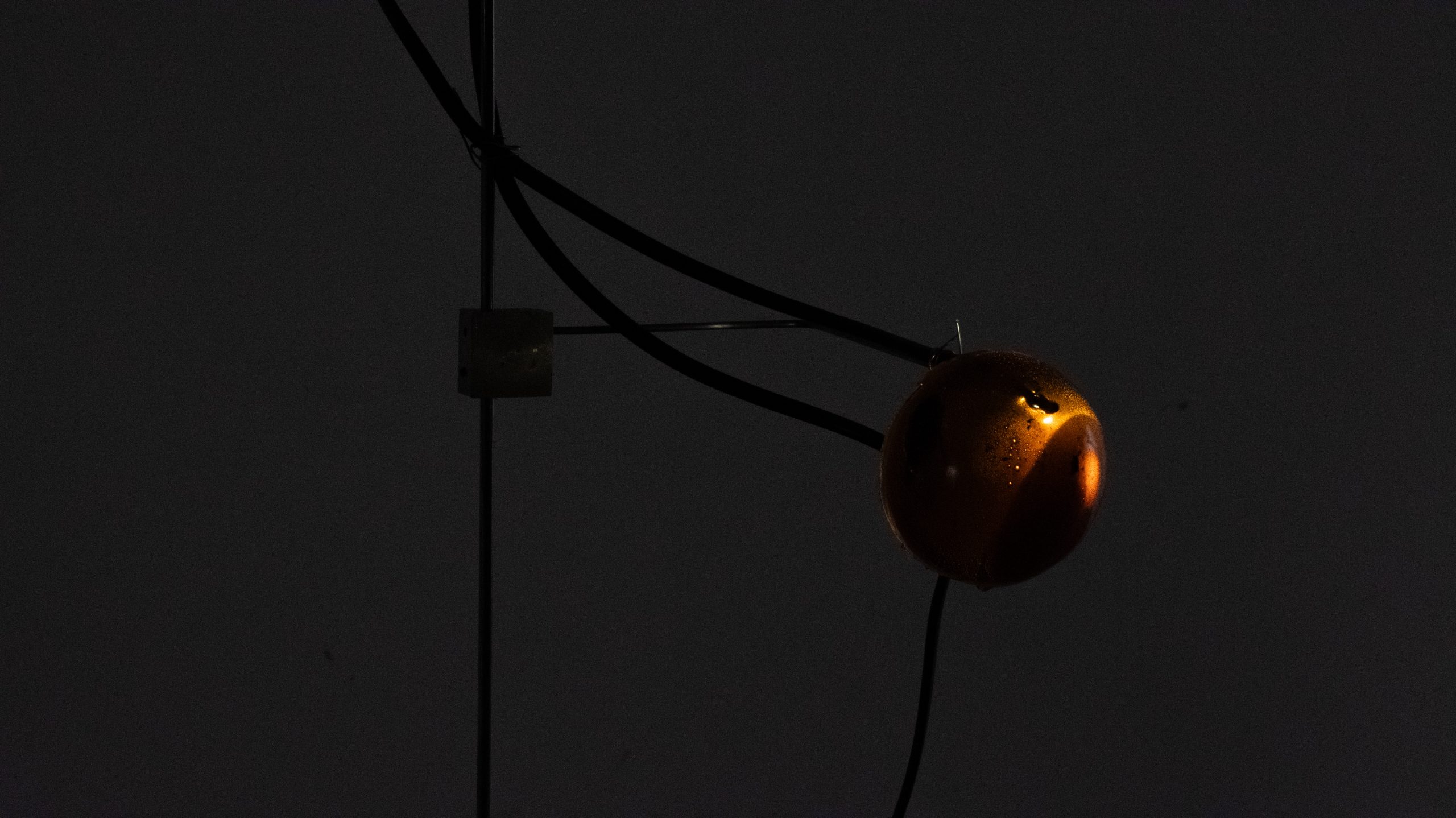
Bit-Rot (2026), spruce resin, aluminium, steel, LED, arduino
Photos: Franziska von den Driesch
Bit-Rot (2026), spruce resin, aluminium, steel, LED, arduino
Bit-Rot
Spruce resin reacts to temperature, light, and time. It becomes brittle, deforms, and is continuously altered through its viscosity. This creates a fragile archive of ecological states, in which decay is experienced not as loss, but as a visible process of memory, environment, and material transformation.
The Bit-Rot installation translates the micro-events of spruce resin (cracks, tensions, stagnation) into Morse code using a self-defined protocol and visualizes them as light pulses through resin lenses. The grid-based installation references both monoculture forestry and digital data storage, reflecting on how ecological processes are increasingly structured and understood as data.
Bit-Rot (2026), spruce resin, aluminium, steel, LED, arduino
Bit-Rot (2026), spruce resin, aluminium, steel, LED, arduino
Photos: Franziska von den Driesch